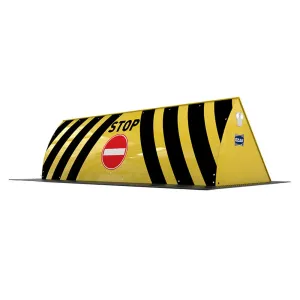
Category Anti-terror road blockers includes retractable or tilting safety barriers, made of high-strength steel and tested in accordance with international anti-terrorist standards. They are capable of stopping high-tonne vehicles, including trucks, by providing active protection against forced access. Anti-terror removable barriers are easily integrated with modern access control, video surveillance and centralized management systems, ensuring a high level of safety without compromising the daily functionality of the protected area.
What are anti-terror removable barriers
Active security systems
Anti-terror removable barriers are mobile protective elements that rise or tilt to block unauthorized vehicles.
Main role
Protection of persons and infrastructure by stopping vehicles in the event of unauthorised attack or access.
Where they are used
Government institutions and strategic objectives
Ensures permanent protection and controlled access.
Urban and pedestrian areas
I allow the management of car traffic without affecting pedestrian traffic.
Commercial centres and corporate offices
Increases the level of security without reducing operational efficiency.
How it works
Operating principle
The detachable barriers shall be operated by hydraulic or electromechanical systems and shall rise rapidly in the locking position.
Integration with access control systems
They can be controlled via remote control, cards, readers, GSM controllers or centralized systems.
Why Anti-terror Removable Barriers Are Important
Certified anti-terrorist protection
They're tested to stop high-speed high-tonne vehicles.
Operational flexibility
Allow quick adaptation to various access and security scenarios.
Advantages of use
- Active and certified anti-terrorist protection
- Automated control of car access
- Integration with modern security systems
- Rapid operation in critical situations
- Robust design, adapted to urban environments
Anti-terror removable barrier types
Hydraulic removable barriers
Recommended for intensive traffic and rapid reaction.
Electromechanical removable barriers
Suitable for medium traffic and various applications.
Customized models
Adapted to specific security and design requirements.
Differences between types/models
Anti-terrorism certification level
The stopping capacity differs according to the test standards.
Reaction rate
Lifting time shall influence safety and traffic flow.
Frequency of use
Models for occasional or intensive use.
How to choose correctly
Essential criteria
Risk level, vehicle type and volume of traffic.
Useful recommendations
Choose certified barriers and compatible with existing access control systems.
Installation and commissioning
Main stage
- Area and risk analysis
- Making the Foundation and the Drainage
- Installation, testing and integration into the system
Professional assembly
Essential for safe operation and maximum impact resistance.
Maintenance and maintenance
Periodic checks
Control of hydraulic or electromechanical systems.
Long-term reliability
Proper maintenance maintains performance and safety.
Common errors
- Choosing an Uncertified Anti-Terrorist Model
- Lack of adequate drainage
- Installation not in accordance with manufacturer specifications
Professional recommendations
- Assess risk level correctly
- Use only tested and certified barriers
- Ensures periodic maintenance and specialized service
Frequently Asked Questions (FAQ)
-
What are anti-terror scavenging barriers?
There are mobile security barriers that block vehicles by lifting or tilting.
-
Can I stop high-tonne vehicles?
Yeah, certified models are tested for extreme impact.
-
Can they be integrated with access control systems?
Yes, they can operate with remote controls, folders, GSM or remote.
-
Are they suitable for intense traffic?
Yes, especially hydraulic models.
-
Do you need regular maintenance?
Yes, for safety and optimal operation.
-
Can they be used in urban areas?
Yes, they are designed for urban and institutional integration.