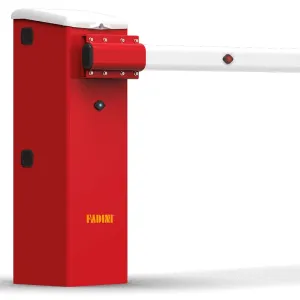
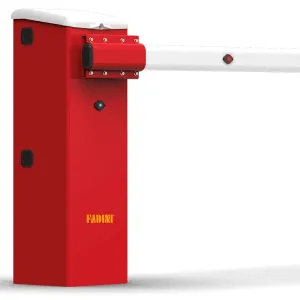
Category Manual barriers includes robust systems, built for daily use and resistance to various environmental conditions. These barriers are ideal for private parking, secondary access roads, residential areas or industrial spaces with reduced traffic. The operation is done manually, by lifting and lowering the arm, and locking is done by means of a safety mechanism or a lock.
What are manual barriers?
Mechanical access control systems
Devices without electrical components, operated exclusively manually.
Practical and economic role
Provides effective control with low purchase and maintenance costs.
Where they are used
Private and residential parks
Courts, residential assemblies and small parking lots.
Industrial and agricultural areas
Access to private warehouses, land or roads.
Commercial spaces with reduced traffic
Secondary access or service areas.
How it works
Simple principle of operation
The user raises or lowers the arm of the manual barrier.
Locking system
The barrier shall be fixed in the desired position by means of a mechanical mechanism or a lock.
Why They Are Important
Energy independence
It works without electricity.
High reliability
Simple structure, with reduced risk of defect.
Advantages of use
- Reduced cost
- Quick assembly
- No energy consumption
- High resistance
- Minimum maintenance
Manual barrier types
Barrier with folding arm
The most common, easy to use.
Manual hoisting barriers
Suitable for spaces with lateral limits.
Barriers with integrated locking system
Ensures an additional level of security.
Differences between types/models
Length of arm
Adapted to the width of the access road.
Material used
Galvanized or painted steel for external resistance.
How to choose correctly
Main criteria
The width of access, frequency of use and the desired level of security.
Useful tips
Choose models resistant to corrosion.
Installation and commissioning
Basic steps
- Fixing the support in concrete
- Barrier assembly
- Adjusting the arm
- Manual testing
Simple assembly
It can also be realized without special equipment.
Maintenance and maintenance
Minimum operations
Periodic lubrication of the joints.
Visual checks
Detection of wear or deformation.
Common errors
- Choosing a barrier too short
- Unstable assembly
- Lack of anti-corrosive protection
Professional recommendations
- Use galvanized external barriers
- Fix solid in foundation
- Periodically check the locking mechanism
Frequently Asked Questions (FAQ)
What is a manual barrier?
A mechanical system for controlling car access.
Does he need electricity?
No, it works completely manually.
Is he sure?
Yes, if installed correctly and provided with locking system.
Can it be used outside?
Yes, it is designed for outdoor use.
Need maintenance?
Only minimal, periodically accomplished.
Is it suitable for intense traffic?
No, it is recommended for low or medium traffic.