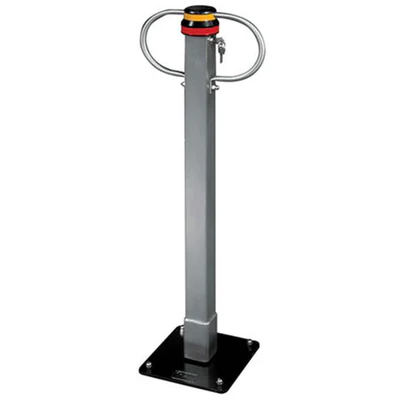
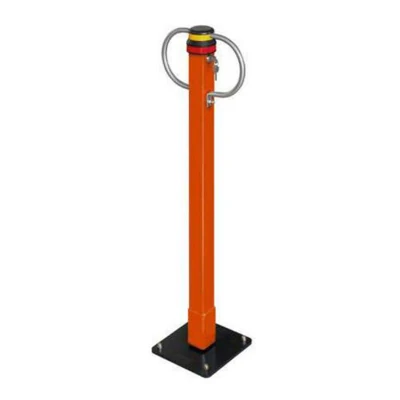
Category Folding bollards includes poles designed to be rolled to the ground or side, manually or assisted mechanical/hydraulic. They offer flexible access control, being the ideal solution for areas with variable traffic. Robust construction ensures sustainability and safety, and integrated mechanisms ensure stability and protection against unauthorized use. Rebuffable Bollards are suitable for applications where temporary access should be allowed quickly, without compromising security.
What are Bollards Folding
Flexible access control systems
There are poles that can be scraped to allow access to vehicles.
Practical role
It ensures the delimitation of areas and allows rapid access where necessary.
Where they are used
Parks and residential alleys
Quick access control of vehicles.
Commercial areas
I allow temporary access in variable traffic spaces.
Pedestrian zones and institutions
It protects infrastructure and pedestrians, allowing access to authorised vehicles.
How it works
Operating principle
The Bollards is manually folded or assisted mechanically to allow access and returns to the vertical position for locking.
Safety and stability
The locking mechanisms shall ensure the correct positioning and resistance to intensive use.
Why they're important
Flexibility and comfort
Allows rapid adaptation of car access according to needs.
Protection and security
Efficiently lock off unauthorized vehicles when they are lifted.
Advantages of use
- Flexible and fast access control
- Simple installation
- Reduced operating costs
- Durability and impact resistance
- Adaptability to different environments and conditions
Types of Rebateable Bollards
Handballs
It is manually scrapped and are ideal for moderate traffic.
Mechanical/hydraulic Bollards
Allowing lift and assisted descent, being suitable for intense traffic.
Bollards with safety closure
Access is only allowed to authorized persons.
Differences between types/models
Rapture mode
Manual, mechanical or hydraulic, depending on the application.
Security level
Models with locking system provide additional protection.
Resistance and sustainability
Different depending on materials, thickness and construction.
How to choose correctly
Essential criteria
Frequency of access, level of security and desired mode of operation.
Useful recommendations
Choose tough models, adapted to traffic and climate conditions.
Installation and commissioning
Main steps
- Preparation of Foundation
- Assemblage of the Bollards
- Test of the locking mechanism and system
Professional assembly
Recommended for durability and maximum safety.
Maintenance and maintenance
Periodic checks
Control of the routing mechanisms and locking systems.
Extended life span
Minimum maintenance ensures optimum operation and long-term safety.
Common errors
- Choosing an inadequate model for intensive traffic
- Improper assembly
- Neglect of verifications and lubrication of mechanisms
Professional recommendations
- Analyze real car flow
- Choose a secure locking system
- Provides regular service and maintenance
Frequently Asked Questions (FAQ)
-
What are the folding bollards?
There are poles that can be reduced manually or mechanically for temporary access.
-
Can they be used outdoors?
Yes, they are designed for outdoor use.
-
Are they suitable for intense traffic?
Mechanical or hydraulically assisted models are recommended for intensive traffic.
-
Does he need electricity?
Only hydraulically assisted models can require power, not manual ones.
-
Are they sure?
Yes, locking systems prevent unauthorized manipulation.
-
Need regular maintenance?
Yes, checking mechanisms and periodic lubrication ensure optimal operation.