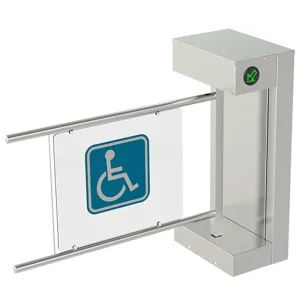
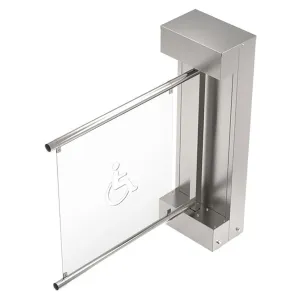
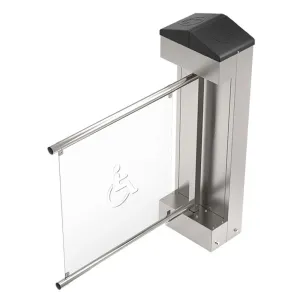
Category Reduced mobility access includes products and technologies that allow easy and secure access for people with travel difficulties. Solutions include mobile and fixed ramps, hydraulic lifts and platforms, fitted gates and turnstiles, specially designed signalling and control systems. These products comply with safety and accessibility rules and can be integrated into any space, whether it is public institutions, shopping centres or office buildings. Benefits include increased independence, comfort and safety for users, as well as legal compliance for building operators.
What are the solutions for reduced mobility
Accessible products and technologies
Includes ramps, elevators, platforms and access systems adapted to the needs of people with reduced mobility.
Practical role
Facilitate safe and independent access to buildings, without obstacles or risks.
Where they are used
Public buildings and institutions
Schools, hospitals, city halls or cultural centers, to ensure easy access.
Commercial centres and offices
For customers and employees with reduced mobility, in accordance with accessibility rules.
Hales and deposits
Secure access for staff or visitors with special needs.
How it works
Operating principle
Mobile or fixed ramps and platforms allow easy movement, and lift systems or access control ensure continuous and safe flow.
Integration with other solutions
They can be connected to signaling systems, automatic doors or adapted turnstiles.
Why They Are Important
Safety and independence
It allows people with disabilities to move independently and safely.
Comfort and accessibility
Adaptation of public and private spaces increases comfort and respects the legislation in force.
Advantages of use
- Secure and independent access for persons with reduced mobility
- Organized flow in buildings and public spaces
- Compliance with legislation and accessibility standards
- Easy integration with other access systems
- Comfort and safety for users
Types of solutions for reduced mobility
Fixed and mobile ramps
Allow passage on steps or level differences.
Hydraulic lifts and platforms
Vertical systems for multi-level buildings.
Fitted gates and turnstiles
Controlled access for disabled users.
Signalling and alarm systems
Visual and sound indicators for safe flow.
Differences between types/models
Level of accessibility
The hydraulic models allow the movement between high levels, while the ramps are for small level differences.
Degree of automation
Some solutions are manual, others are fully automated, integrated with access control systems.
How to choose correctly
Essential criteria
The type of user, the level of accessibility required, the available space and the compatibility with the existing infrastructure.
Useful recommendations
Choose certified products, with warranty and complying with legal accessibility standards.
Installation and commissioning
Main steps
- Choosing the right model
- Assembly according to manufacturer's instructions
- Integration with access and signalling systems
- Functionality testing
Professional installation
Recommended for hydraulic lifts and platforms, for maximum safety.
Maintenance and maintenance
Periodic reviews
Verification of mechanisms, hydraulic and electrical systems.
Extended life span
Regular maintenance prolongs the optimal functioning and safety of users.
Common errors
- Choosing an inappropriate model for the type of user
- Non-integration with existing infrastructure
- Lack of regular maintenance
Professional recommendations
- Analyses the real needs of users
- Choose certified and space-adapted solutions
- Plan periodic safety and reliability reviews
Frequently Asked Questions (FAQ)
-
What does reduced mobility mean?
It refers to persons who have difficulty moving, either temporarily or permanently, and require special solutions for access.
-
What solutions are available?
Ramps, elevators, hydraulic platforms, gates and adapted turnstiles, signalling systems.
-
Can they be integrated into existing buildings?
Yes, most solutions allow adaptation and integration with existing infrastructure.
-
Do you need maintenance?
Yes, for safety and proper operation.
-
Can they be used outside?
Yes, there are weather-resistant models.
-
Does it respect legal standards?
Yes, certified products comply with the accessibility legislation of persons with disabilities.