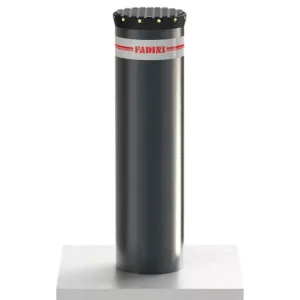
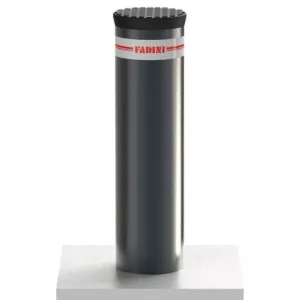
Category Fixed anti-terror bollards includes security pillars permanently mounted in the ground, made of high-strength materials and tested in accordance with international anti-terrorism standards. They are one of the most effective passive protection solutions, being able to stop high tonnage vehicles and protect sensitive perimeters. Thanks to the robust design and lack of mobile components, fixed anti-terror pillars provide maximum reliability, low maintenance costs and easy integration into the urban or industrial environment.
What are anti-terror fixed pillars
Passive security elements
The anti-terror fixed pillars are rigid structures, solid anchored in the foundation, designed to block vehicles in the event of impact.
Main role
Protection of critical persons, buildings and infrastructure against deliberate or accidental attacks.
Where they are used
Government and military institutions
Ensures permanent protection at sensitive entrances and perimeters.
Public buildings and urban spaces
Protect pedestrian areas, markets and administrative buildings.
Commercial centres and private areas
Controls car access and reduces security risks.
How it works
Principle of protection
Anti-terror fixed pillars absorb and disperse impact energy, stopping the vehicle before reaching the protected area.
Robust construction
Made of high-strength steel, with deep foundations and armed structures.
Why are the anti-terror fixed pillars important
Constant security
Provides 24/7 protection, without dependence on electricity or control systems.
Risk reduction
They prevent vehicle attacks and serious accidents in sensitive areas.
Advantages of use
- Permanent protection against impact
- Without mobile or electronic components
- Minimum maintenance costs
- High resistance to extreme weather conditions
- Aesthetic integration in the urban environment
Types of anti-terror fixed pillars
Cylindrical or square pillars
Available in different sizes and finishes.
Certified anti-terrorist pillars
Test for stopping high-tonne vehicles.
Customized models
Adapted to architectural and security requirements.
Differences between types/models
Certification level
Vehicle stopping capacity varies according to standards.
Dimensions and mounting depths
Influence the degree of protection offered.
Finishing and design
Functional vs. aesthetic, depending on location.
How to choose correctly
Important factors
Risk level, vehicle type and location of the area.
Useful tips
Select certified and mounted pillars as specified by the manufacturer.
Installation and commissioning
Main stage
- Soil and protected area analysis
- Completion of Foundation
- Assembly and definitive fixation
Professional assembly
Essential for achieving the maximum level of protection.
Maintenance and maintenance
Reduced requirements
Anti-terror fixed pillars require minimal verification.
Increased durability
Solid construction ensures a long lifespan.
Common errors
- Sub-dimension of the Foundation
- Choosing uncertified models
- Assembly not in accordance with technical specifications
Professional recommendations
- Call for specialist advice
- Use International Certified Products
- Ensure professional assembly and periodic checks
Frequently Asked Questions (FAQ)
-
What are anti-terror fixed pillars?
There are passive security elements permanently mounted for vehicle locking.
-
Does he need electricity?
No, it works without electricity.
-
Can they be used in public spaces?
Yes, they are ideal for urban and institutional areas.
-
Are they certified anti-terrorist?
Professional models meet international standards.
-
Need frequent maintenance?
No, just minimal periodic checks.
-
Can they be aesthetically customized?
Yes, there are variations with finishes adapted to the architecture of the area.