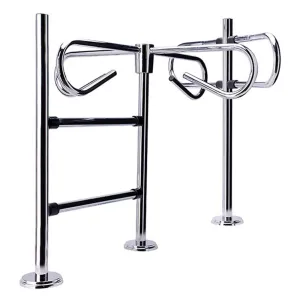
Category Rotor turnstiles includes systems with rotating arms that allow a person to pass at a given time, preventing unauthorized access and providing increased security. These turnstiles are ideal for offices, institutions, sports rooms or shopping centers with medium or intense traffic. They can be integrated with electronic access control systems, scoring software or other monitoring solutions, providing reliable and sustainable operation.
What are rotor turnstiles?
Rotary pedestrian access control systems
Devices with rotating arms that allow people to pass only after authorization by card, code or electronic signal.
Practical role
Ensure security, monitoring and orderly flow of people.
Where they are used
Offices and corporate buildings
Managing employees and visitors' entrances.
Commercial centres and public spaces
Access controlled in areas with medium or intense traffic.
Sports institutions and facilities
Schools, gyms or event rooms.
How it works
Operating principle
The rotor arms rotate to allow passage only authorized persons.
Integration with control systems
Connectable to access management software, scoring or security systems.
Why They Are Important
Security and control
It prevents unauthorized access and organises the efficient pedestrian flow.
Speed and comfort
It allows people to move quickly, maintaining the security of the system.
Advantages of use
- Controlled and secure access
- Fast and organized pedestrian flow
- Reliable and sustainable operation
- Adaptable for medium and intensive traffic
- Integration with electronic systems
Types of rotor turnstiles
Standard rotor turnstiles
Classic rotating arms, suitable for medium flow.
Electronically controlled rotor turnstiles
Integration with cards, cards, codes or biometric systems.
Safety sensor rotor turnstiles
Detect the obstacles to accident prevention.
Differences between types/models
Security level
Sensor models and electronic control provide additional protection.
Passing speed
The rotor arms allow rapid passage, keeping access control.
How to choose correctly
Essential criteria
The flow of people, the level of security and integration with existing systems.
Useful recommendations
Choose certified turnstiles adapted to the type of traffic and available space.
Installation and commissioning
Main steps
- Choosing the right model
- Assembly according to instructions
- Connection to the access control system
- Functionality testing
Professional installation
Recommended for electronic integration models.
Maintenance and maintenance
Periodic reviews
Verification of electrical arms, sensors and connections.
Extended life span
Proper maintenance prolongs the optimal operation of the turnstiles.
Common errors
- Choosing an inappropriate model for flow
- Failure to integrate with existing systems
- Lack of regular maintenance
Professional recommendations
- Analyze the flow of people
- Integrate turnstiles with scoring or monitoring systems
- Schedule periodic safety reviews
Frequently Asked Questions (FAQ)
-
What's a rotor spinner?
A pedestrian access control system with rotating arms.
-
Do they match for intense traffic?
Yeah, they're ideal for medium flow to intense people.
-
Can they be integrated with scoring systems?
Yes, allow integration with access management software.
-
Do you need maintenance?
Yes, for safety and proper operation.
-
Can they be used outside?
Some models are weather resistant, check the specifications.
-
Are they safe for children and tall people?
Yes, if installed correctly and complies with the manufacturer's specifications.