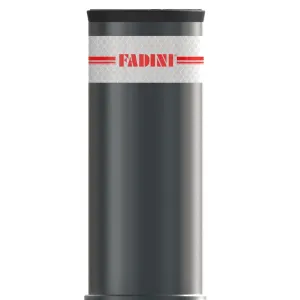
Category Traffic and security bollards includes robust products designed to withstand impact, intense traffic and difficult weather conditions. They are used to protect buildings, delineate pedestrian areas, control car access and prevent unauthorized parking. Depending on the application, balloons can be permanent or mobile and can be integrated with access control systems, remote controls, GSM cards or control. Modern solutions provide an optimal balance between safety, functionality and design.
What are traffic and security bollards
Protection and delimitation elements
They are metal poles or composition, fixed or movable, used for the control of access and protection of areas.
Practical role
They prevent unauthorised access of vehicles and protect pedestrians, buildings and infrastructure.
Where they are used
Pedestrian areas and urban centres
Delimiting pedestrian spaces and preventing car access.
Parking and commercial spaces
Control of entry, protection of reserved areas and organisation of traffic.
Institutions and administrative buildings
Increasing the level of security and perimeter protection.
How it works
Operating principle
Fixed Bollards provide permanent protection, and retractable or automated Bollards allow controlled access to authorised vehicles.
Integration with modern systems
They can be connected to remote controls, GSM systems, cards or control panels.
Why they're important
Safety and prevention
Reduce the risk of unauthorized access and accidents.
Effective traffic control
Ensures clear organisation of the zones and the car flow.
Advantages of use
- Increased protection for buildings and pedestrians
- Effective control of car access
- Impact resistance and weather
- Integration with access control systems
- Design adaptable to urban space
Types of traffic and security balloons
Bollards fixed
Permanent solution for delimitation and protection.
Hand retractable Bollards
I allow occasional access, with simple operation.
Automatic retractable bollards
Fully automated control, integration with access systems.
Anti-impact security bollards
Projected for high-risk areas and advanced protection.
Differences between types/models
Security level
Anti-impact Bollards offer superior protection compared to standard ones.
Operating mode
Differences between fixed, manual and fully automated solutions.
How to choose correctly
Essential criteria
The desired level of safety, type of traffic, frequency of use and integration with other systems.
Useful recommendations
Choose certified, environment-friendly and real-life bollards.
Installation and commissioning
Main steps
- Area and risk assessment
- Selection of the type of bollards
- Professional assembly
- System testing and configuration
Specialized installation
Recommended for automatic or high security bollards.
Maintenance and maintenance
Periodic checks
Inspection of mechanisms, electrical systems and structure.
Long-term reliability
Regular maintenance ensures safe and sustainable operation.
Common errors
- Choosing an undersized model
- Inadequate installation
- Lack of regular maintenance
Professional recommendations
- Analyse the risks of the area
- Choose solutions that meet standards
- Work with assembly specialists
Frequently Asked Questions (FAQ)
-
What are traffic and security bollards?
These are protective elements used for access control and zone delimitation.
-
Can they be automated?
Yes, there are automatic retractable bollards integrated with access control systems.
-
Where do they use most of the time?
In pedestrian areas, parks, institutions and commercial spaces.
-
Need maintenance?
Yes, especially automatic or anti-impact models.
-
Can you resist impact?
Security models are specially designed for high resistance.
-
Can they be customized?
Yes, there are different options of sizes, finishes and functions.