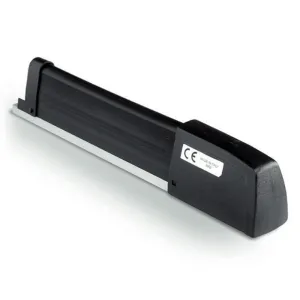
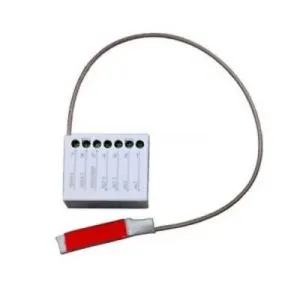
Category Safety edges includes protective devices that react to pressure or contact, transmitting a signal to the control centre to stop or change the direction of operation of the automation. They are frequently used in areas where there is a risk of crushing or impact, such as the edges of the sliding gates, doors or industrial doors. Choosing suitable sensitive edges contributes significantly to the safety of users, protecting vehicles and extending the life of the automation system.
What are Sensitive Edges
Active safety devices
Sensitive edges detect pressure or contact and send a stop signal to the system.
Their role in automation
Ensures the protection of persons, animals and goods during the operation of automatic gates.
Where they are used
Residential applications
Access gates for homes, private courtyards and garage doors.
Commercial and industrial applications
Parks, industrial halls, warehouses and areas with intense traffic.
How it works
Operating principle
When in contact with an obstacle, the sensitive edge detects the pressure and transmits the signal to the power station.
Activation types
Mechanical or electronic, depending on model and application.
Why They Are Important
Accident prevention
Reduce the risk of damage or damage to property.
Compliance with safety rules
It helps to comply with European standards for automation.
Advantages of use
- Increase in safety level
- Effective accident protection
- Compatibility with most automations
- Relatively simple installation
- High reliability
Types of Sensitive Edges
Mechanically sensitive edges
It works by directly detecting pressure.
Electronic sensitive edges
I'm transmitting the electrical signal to the power station for a quick reaction.
Industrial sensitive edges
Designed for intense use and difficult conditions.
Differences between types/models
Sensitivity level
Models differ by the force required for activation.
Residential vs. industrial applications
The industrial ones are more robust and resistant.
How to choose correctly
Selection criteria
Type of gate, length required, compatibility with the power station and the operating environment.
Useful tips
Choose certified and tested sensitive edges for maximum safety.
Installation and commissioning
Basic steps
- Establishment of the risk zone
- Mounting the edge on the edge of the gate
- Connection to the power station
- Test of operation
Professional recommendations
The correct installation ensures fast reaction and safe operation.
Maintenance and maintenance
Periodic checks
Testing sensitivity and electrical connections.
Common problems
Mechanical wear or weak connections, easy to fix.
Common errors
- Improper assembly on the edge
- Choosing an Improper Length
- Rejection of periodic testing
Professional recommendations
- Use approved sensitive edges
- Test periodic operation
- Applies to specialists for industrial applications
Frequently Asked Questions (FAQ)
What is a sensitive border?
A safety device that detects contact and stops automatic gates.
Is it mandatory to mount it?
In many applications, yes, for compliance with safety rules.
Where does he go?
On the edge of the gates or areas at risk of impact.
Does it work with any power station?
Only with compatible power plants or dedicated interfaces.
Do you need maintenance?
Yes, periodic checks for correct operation.
Is it suitable for industrial use?
Yes, there are dedicated models for industrial applications.