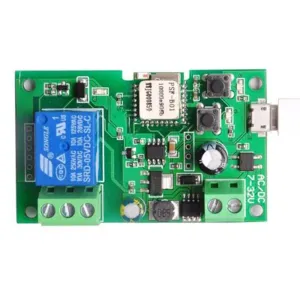
Category Transmitter modules includes devices designed to transmit radio commands or specific signals to automation systems. They are used together with radio receivers and control stations to allow the opening, closing or control of automatic doors and other equipment. The emitting modules are indispensable in applications where remote control, integration with other systems or expansion of existing functionalities is required. The correct choice of an issuer mode contributes to the safety, reliability and efficiency of the entire system.
What are Issuer Modules
Signal transmission devices
The emitting modules shall send radio signals or pulses to the receivers, initiating actions in the automation system.
Role in automation
These allow direct contactless control, providing flexibility and user comfort.
Where they are used
Residential automation
Swing gates, sliding gates and garage doors in private homes.
Commercial and industrial applications
Parking spaces, office buildings, logistics spaces or areas with controlled access.
How it works
Operating principle
The emitting module generates a signal that is received by a compatible receiver, triggering the desired command.
Transmission types
Radio signal on standardised frequencies or protocols dedicated to manufacturers.
Why They Are Important
Remote control
Allow the operation of systems without cables or direct intervention.
Easy integration
They can be connected with various receivers and control stations.
Advantages of use
- Fast and secure transmission of orders
- Compatibility with various automatic systems
- Simple installation
- Effective access control
- High operational reliability
Types of issuing modules
Radio emitting modules
They transmit wireless signals to compatible receivers.
Integrated emitting modules
Embedded in other equipment, such as power stations or controls.
Industrial issuing modules
Designed for intensive use and difficult conditions.
Differences between types/models
Frequency and compatibility
Differences occur depending on the working frequency and the transmission protocol.
Residential vs. industrial use
Industrial models offer greater radius and increased resistance.
How to choose correctly
Essential criteria
Compatibility with the receiver, working frequency, action range and desired application.
Practical advice
Choose original and certified emission modules for optimal performance.
Installation and commissioning
Basic steps
- Identification of the compatible system
- Connecting the transmitter module
- Signal programming
- Transmission testing
Professional recommendations
The correct installation ensures stable and non-interference transmission.
Maintenance and maintenance
Periodic checks
Test of the action range and signal stability.
Common problems
Radio interference or incorrect configuration, easy to remedy.
Common errors
- Choosing an incompatible mode
- Ignoring correct frequency
- Improper assembly or configuration
Professional recommendations
- Check technical specifications before purchase
- Choose modules compatible with existing equipment
- Request technical support for complex applications
Frequently Asked Questions (FAQ)
What is a emitter mode?
A device that transmits control signals to receivers or power stations.
Is it compatible with any system?
Only with systems that use the same frequency and protocol.
What's the range of action?
It depends on the model, medium and antenna, from a few meters to hundreds of meters.
Do you need an appointment?
Yeah, most modules need to be programmed with the receiver.
Can interferences occur?
In radio crowded areas, yes, but they can be reduced by proper configuration.
Do you need maintenance?
Minimum, consisting of periodic checks.