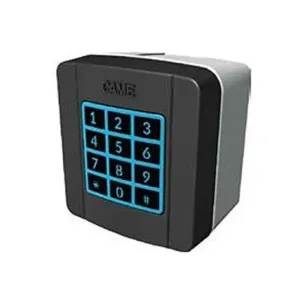
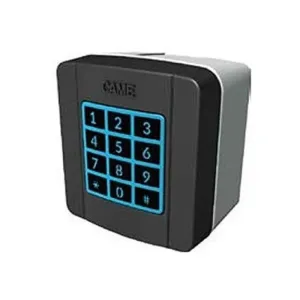
Category Keypad selectors includes modern access control equipment in gate automation systems, garage doors and barriers. These devices function by entering a PIN code, enabling electrical contact to the control station. Code selectors are suitable for residential, commercial or industrial use and can be easily integrated with other access systems such as GSM controllers or control stations. Removing physical keys reduces the risk of unauthorized loss or copying.
What Code Selectors Are
Digital keyboard access control devices
Code selectors allow access by entering a preset code, without keys or remote controls.
Role of the selector in security
Provides precise control over access and the possibility of rapid code change where necessary.
Where they are used
Residential dwellings and garages
Ideal solutions for gate and garage doors where more people need access.
Commercial spaces and institutions
Commonly used in parking lots, office buildings or restricted access areas.
How it works
Operating principle
Introducing the correct code activates the electrical contact and transmits the command to automation.
Functional benefits
Quick access, easy user control and elimination of the risk of key loss.
Why They Are Important
Security without keys
Code selectors reduce the risks associated with physical keys and allow code change whenever necessary.
Flexibility in administration
Codes may be changed rapidly to control access by authorised persons.
Advantages of use
- Secure access without keys
- Easy to modify code
- Compatibility with most automations
- Ideal for many users
- Modern and easy to use design
Types of Selector with Code
Mechanical code selectors
It works without electrical power for keyboard, providing enhanced reliability.
Electronic code selectors
Provides advanced functions such as keyboard lighting or audio signaling.
Exterior code selectors
Weather resistant housing, ideal for outdoor mounting.
Industrial code selectors
Designed for intense traffic and difficult environments.
Differences between types/models
Mechanic vs. Electronic
The mechanical models are robust and simple, the electronic ones offer additional comfort and functions.
Residential vs. industrial
Industrial selectors are more resistant and allow intensive use.
How to choose correctly
Selection criteria
Type of automation, assembly environment, desired security level and number of users.
Useful tips
Choose certified models, with appropriate protection and compatibility with the plant.
Installation and commissioning
Basic steps
- Assembly of the selector in an accessible area
- Connection to the control station
- Initial code setting
- Test of operation
Professional recommendations
Installation by specialists ensures proper functioning and durability.
Maintenance and maintenance
Periodic checks
Keyboard testing, contact verification and code change at regular intervals.
Common problems
Used keys, compromised code or electrical defect – repaired by maintenance or replacement.
Common errors
- Choosing a code easy to guess
- Lack of regular code change
- Assembly in unprotected areas
Professional recommendations
- Use complex codes
- Change Periodic Code
- Integrate the selector with other access control systems
Frequently Asked Questions (FAQ)
What is a code selector?
Access control device that allows the operation of automations by numerical code.
Is a code selector sure?
Yes, especially if complex codes are used and changed periodically.
Can it be used outdoors?
Yes, there are weather-resistant models.
What happens if I forget the code?
The code may be reset according to the manufacturer's instructions.
Is it compatible with any automatic gates?
Most models are compatible with standard power plants.
Does he need electricity?
Electronic models require food, not mechanical ones.