Sliding gate hard to move by hand: what to fix before installing automation
Do you need help choosing?
Tell us what you need and we'll send you the offer on the same working day.
Sliding gate hard to move by hand: what to fix before installing automation
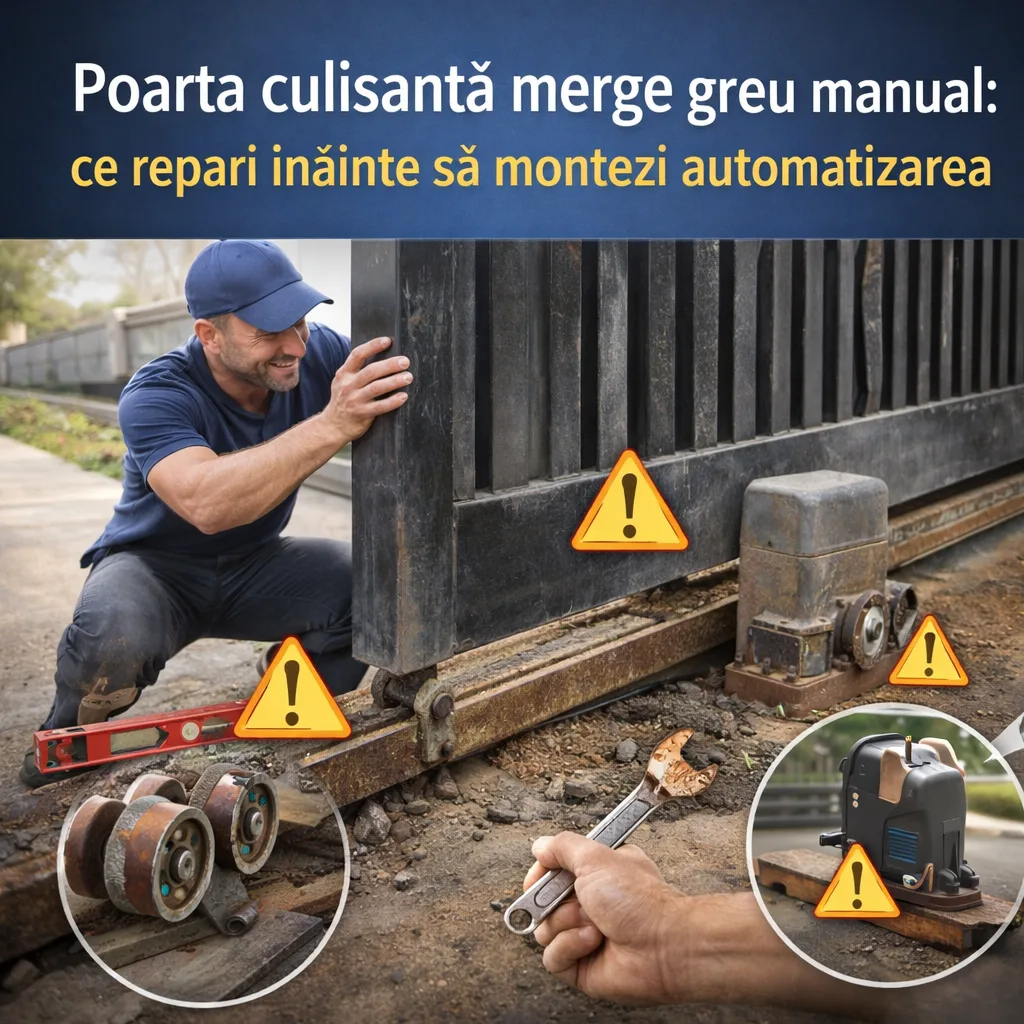
A sliding gate that moves hard manually is a clear sign that there are mechanical problems that need to be solved before an automation is mounted. Installing an motor on a faulty gate can lead to rapid wear, incorrect operation and additional costs. In this article you will find out which checks and repairs are essential before automating a sliding gates
Why it's important for the gates to go easily manually
Automation of a gate does not solve the mechanical problems. The engine is designed to operate a balanced and well-adjusted gate. If the gate goes hard, the engine will be over-demanded, which can lead to premature failure, increased energy consumption and loss of warranty.
Verification of the running track
The track must be straight, clean and well fixed. Land, gravel or rust deposits may make it difficult to move the gate. Check if the track is continuous, without any deterioration in elevations or grooves. Cleaning and straightening of the track are mandatory steps.
Harvesting rollers
Roles are the most requested elements. If they're worn, flu or poor quality, it'll go hard. Check if the wheels are rotated freely and if they are aligned correctly. In many cases, replacing roles completely solves the problem.
Port alignment
A swivel-mounted gate creates extra friction. Check whether the gate is perfectly parallel to the track and whether it does not touch the ground or other structural elements. Fine adjustments may make a major difference in operation.
Upper steering wheel
The top guide must support the collars without force. If the steering wheels are too tight or incorrectly mounted, the gates will go hard and noisy. The correct regulation ensures stability and smooth movement.
Constituency and balance of the portion
The sliding necks must be balanced, especially in the counterweighted area. Too short or poorly sized counterweights lead to excessive pressure on the rollers and rails. Correction of this aspect is essential before automation.
Correct lubrication
Lack of lubrication or use of inappropriate products may make it difficult to move. Special lubricants are recommended for gates without attracting dust and dirt. Lubrication is only done after complete cleaning.
Verification of the metal structure
Frame deformations, weak souths or rusty elements may affect the functioning of the gate. Repair of the structure is necessary for a safe and sustainable automation.
When is the right time for automation
Gates is ready for automation when it can move easily manually, without slicing, noise or blocking. This is the basis for efficient and reliable long-term automation.
Conclusion
Repair and adjustment of the sliding portion before the assembly of the automation is not optional but essential. A well-handled gate will protect the engine, ensure quiet operation and reduce maintenance costs.